DOE calls for stronger global action to protect ozone layer, tackle climate change
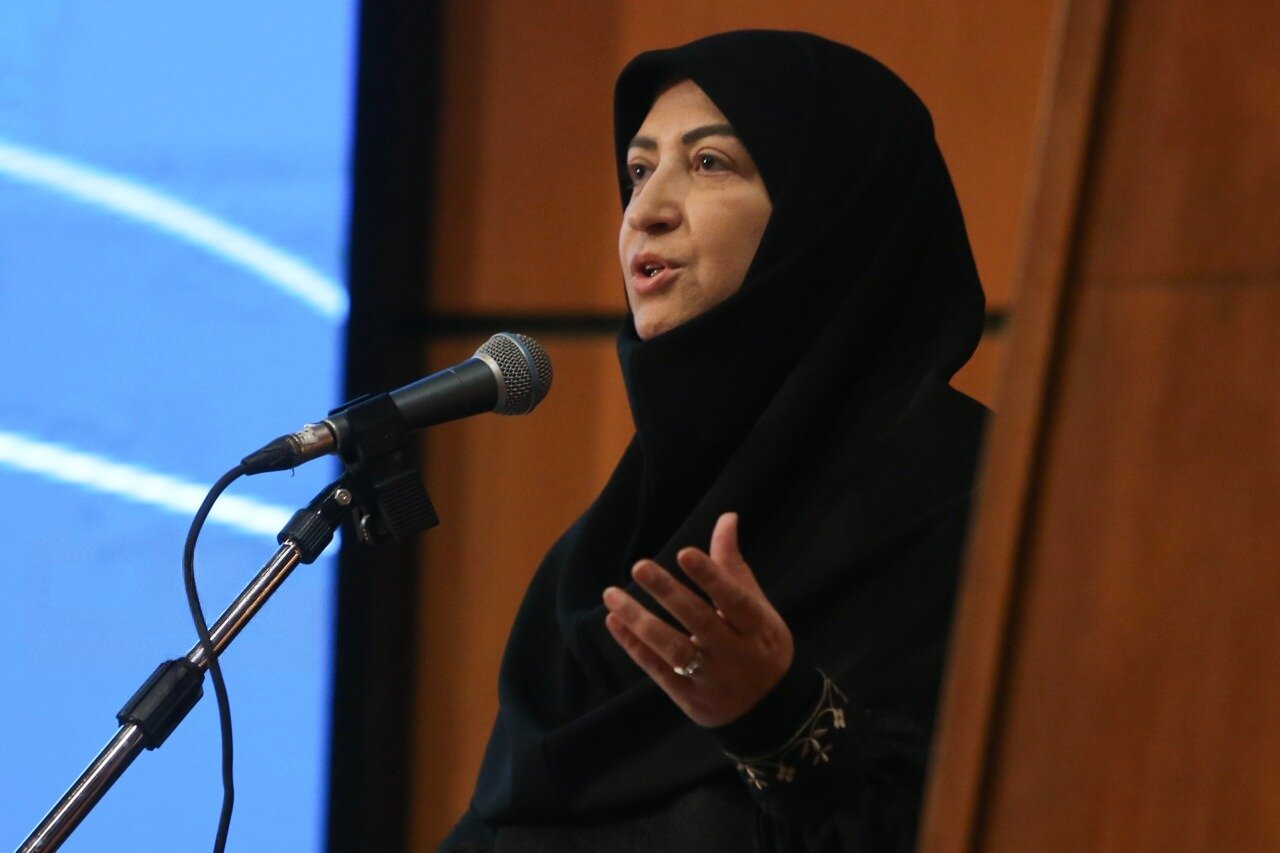
TEHRAN – Shina Ansari, the head of the Department of Environment, has called for stronger international cooperation to address the harmful effects of ozone-layer depletion and climate change, saying that global participation, strong commitment to obligations, and dedicated financial resources can produce real, tangible, measurable, and monitorable results.
Speaking at a ceremony on Tuesday, marking World Ozone Day, she said, “We have gathered today to reaffirm our commitment to fully restoring and rebuilding the Earth’s protective shield and safeguarding life against harmful solar radiation. We must take more effective steps toward our shared goals of addressing global environmental challenges, both in protecting the ozone layer and in mitigating global warming.”
Referring to the Montreal Protocol, Ansari said it is a global agreement aimed at controlling the production, trade, and consumption of chemicals that deplete the ozone layer, with the ultimate goal of protecting life on Earth through the gradual phase-out of ozone-depleting substances.
The official added that the landmark agreement, adopted in 1987 and entering into force in 1989, is now regarded as one of the world’s most successful environmental agreements and an inspiring model for environmental cooperation.
“Thanks to the joint efforts of countries around the world, the ozone layer is currently on a path toward recovery and restoration, and significant progress has been made in this regard,” she said.
The protocol has demonstrated that science-based policymaking, global participation, effective international cooperation, strong commitment to obligations, and dedicated financial resources can produce real, tangible, measurable, and monitorable results, Ansari noted.
She added that this process has not only made ozone-layer protection possible but has also enabled countries and industries to move toward safer, more environmentally friendly alternatives while supporting economic development.
Kigali Amendment
Referring to the Kigali Amendment, Ansari said this year marks the 10th anniversary of the amendment, the latest amendment to the Montreal Protocol, which was adopted to gradually reduce global emissions of powerful greenhouse gases known as hydrofluorocarbons (HFCs) and accelerate the transition to more efficient and safer refrigerants.
Over the past decade, implementation of the amendment in various countries has demonstrated how the promotion of efficient technologies, the strengthening of industrial capacity, and support for innovation in the refrigeration sector can help advance development priorities, she said.
Ansari predicted that full implementation of the amendment could prevent between 0.5 and 1 degree Celsius of global warming by 2100, describing it as one of the most important approaches to mitigating climate change in the present century.
She said that, in line with the protocol’s new objectives of aligning ozone-layer protection with efforts to reduce global warming, issues such as new technologies, increased energy efficiency, equipment modernization, and the development of environmentally friendly technologies have been prioritized, taking into account the country’s current circumstances, economic considerations, industrial capacity, market needs, and access to safe technologies.
Given the structure of the Montreal Protocol and the cooperation of its implementing agencies and financial mechanisms, Iran can use the implementation of its international environmental commitments as an opportunity to modernize and develop domestic technology, the DOE head said.
Referring to this year’s World Ozone Day theme, “Global Action for a Cooler Planet,” Ansari said the slogan reflects the international community’s efforts to protect the ozone layer and the need to continue this path with future generations in mind.
“These efforts offer us the prospect of successfully implementing the Montreal Protocol and creating the necessary conditions and capacities to help address global environmental crises,” she said.
The official stressed that, as an inspiring agreement, the Montreal Protocol symbolizes humanity’s ability to cooperate.
“When humanity reaches consensus and demonstrates a firm determination to resolve one of the major global environmental crises, it becomes clear that such an achievement is possible,” she said.
Ansari added that the agreement has succeeded in realizing this goal, expressing hope that the international community would, through greater cooperation and the responsible conduct of officials, take steps toward addressing the environmental challenges currently facing the world, including habitat and biodiversity protection and plastic pollution as a global concern.
“We hope that this global cooperation can also pave the way for consensus and collaboration on other issues and challenges that have emerged as crises around the world,” she said.
Iran’s environmental commitments
Ansari said the Islamic Republic of Iran has taken effective steps in this direction in recent years through cooperation among national and international executive bodies, as well as governmental and nongovernmental sectors.
She added that various industries using substances covered by the Montreal Protocol, along with other stakeholders, have taken significant and commendable steps. Such progress has been made possible through a shared and responsible approach to fulfilling the country’s commitments under these international treaties, she said.
The head of the Department of Environment further noted that the country is also facing another environmental challenge: the damage and losses caused by two imposed wars waged against Iran over the past two years.
“These two unjust wars, in addition to the many forms of damage they have inflicted on the country, have damaged infrastructure, and unfortunately, civilian targets have also been attacked,” she said.
“Cultural and historical heritage sites have been targeted, scientific and research centers have been damaged, and irreparable losses have unfortunately been inflicted on the country’s natural habitats, coastal ecosystems, biodiversity, and even our environmental protection facilities.”
From this perspective, Ansari stressed, the harmful effects and consequences of wars—which can constitute a serious obstacle to the implementation of international agreements—must also be taken into account, as they can have extremely damaging repercussions.
Leave a Comment